Source ip67 m12 female metal housing for Automation, Medical, and Industrial
Compare 30 listings of ip67 m12 female metal housing connectors with options for copper, brass, and PA66 materials. Buyers can evaluate rated voltage, current, pin counts, and certification details for power and signal applications.
Key considerations
Products List




Comprehensive Sourcing Guide
Strategic Sourcing Guide for IP67 M12 Female Metal Housing Connectors
Procuring industrial-grade M12 connectors with an IP67 rating and a metal housing requires a disciplined approach that balances technical precision with supply chain reliability. The core keyword "IP67 M12 female metal housing" identifies a specific class of circular connectors designed for harsh environments, where protection against dust and temporary water immersion is critical. In the B2B market, these components serve as the backbone of automation, robotics, and process control systems. Buyers must navigate a landscape of varying material compositions, certification standards, and pin configurations to ensure the selected components meet the rigorous demands of their specific applications. This guide outlines the essential factors for evaluating these connectors, grounded in observed market data and established engineering standards.
Technical Specifications and Material Integrity
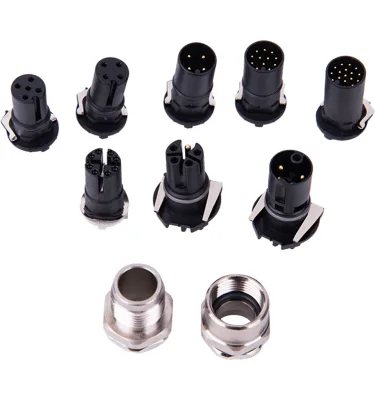
The physical construction of an M12 female metal housing connector is defined by its housing material, terminal composition, and sealing mechanisms. Based on available product data, the housing material for high-durability units is frequently specified as brass nickel-plated or zinc alloy nickel-plated. These materials provide the necessary structural rigidity and corrosion resistance required for industrial settings. The plating process is critical; nickel plating on brass or zinc alloy enhances conductivity and prevents oxidation, which is vital for maintaining signal integrity in high-frequency applications. Some variations utilize copper nickel-plated housings, offering an alternative balance of strength and electrical performance.
The terminal material is another decisive technical factor. The supply chain offers options ranging from phosphor copper to copper galvanized. Phosphor copper is often preferred for its superior spring properties and resistance to fatigue, ensuring a stable connection over repeated mating cycles. In contrast, copper galvanized terminals may be utilized in specific cost-sensitive or less corrosive environments. The contact resistance for these units is observed to be as low as 3.8mΩ, a figure that indicates high-quality conductive paths essential for power and signal transmission. Furthermore, the insulator material typically consists of PA+GF (Polyamide with Glass Fiber) or TPU (Thermoplastic Polyurethane), providing thermal stability and mechanical strength.
The pin configuration is highly variable, with observed counts including 2, 3, 4, 5, 6, 8, 12, 14, 16, 17, 19, and 24 pins. The rated voltage varies significantly based on the pin count; for instance, 3 and 4-pin configurations often support up to 250V, while 5-pin versions may be rated for 125V. In other specific assemblies, 8-pin connectors are rated for 60V, and 12-pin variants for 30V. Buyers must verify these ratings against their specific system requirements, as the voltage handling capability is not uniform across all pin counts. The coupling mechanism is predominantly threaded, ensuring a secure mechanical lock that is essential for maintaining the IP67 rating during operation.
Compliance, Certification, and Standards Verification
Ensuring that an M12 connector complies with international standards is a non-negotiable aspect of the procurement process. The market data indicates adherence to several key standards, including NEMA2000 and IEC61076-2-104. The IEC standard is particularly relevant for industrial Ethernet and sensor applications, defining the mechanical and electrical characteristics of the connector interface. Buyers should verify that the supplier explicitly states compliance with these standards rather than relying on generic claims.
Certification plays a pivotal role in validating the safety and environmental compliance of the product. Observed certifications include ISO 9001, RoHS, CE, and MSDS. ISO 9001 indicates a certified quality management system, while RoHS compliance ensures the product is free from restricted hazardous substances. CE marking is a mandatory requirement for products sold within the European Economic Area, confirming conformity with health, safety, and environmental protection standards. Additionally, MSDS (Material Safety Data Sheet) documentation is crucial for understanding the chemical composition of the materials used, particularly regarding the housing and insulator materials.
The waterproof grade is a primary performance metric. The IP67 rating signifies that the connector is dust-tight and can withstand immersion in water up to 1 meter for 30 minutes. However, the actual performance depends on the integrity of the sealing elements. The molding material, often TPU or PVC, and the waterproof grade of the thermoplastic plastic PA66 are critical for maintaining this seal. Buyers must confirm that the IP67 rating is tested and verified, as the sealing effectiveness can degrade if the mating cycle exceeds the rated durability, which is observed to be more than 500 cycles for high-quality units.
Cost Drivers and Pricing Dynamics
The pricing of M12 female metal housing connectors is influenced by a complex interplay of material costs, manufacturing complexity, and order volume. The observed price range in the market spans from $0.10 to $500 USD, a wide spectrum that reflects the diversity of product configurations. The lower end of the range typically corresponds to basic plastic assemblies or lower pin-count versions with standard materials. The higher end of the spectrum is driven by metal housing variants, higher pin counts, specialized coding (such as A, B, D, X, T, L, K, S), and premium certifications.
Material costs are a significant driver. Brass and copper alloys are generally more expensive than plastic alternatives, and the plating process adds to the unit cost. Gold-plated contacts, often found in high-reliability applications, further increase the price. The customization factor is another variable; while customization is available, it often incurs additional tooling and setup costs. The minimum order quantity (MOQ) also impacts the effective unit price. Observed MOQs range from 1 to 100 units, suggesting that small-batch buyers may face higher per-unit costs compared to those placing bulk orders.
Buyers should analyze the total cost of ownership rather than just the unit price. A cheaper connector with lower durability or inferior plating may lead to higher maintenance costs and system downtime. The rated current, typically observed at 3A or 4A, and the operating frequency, noted as high frequency, are performance indicators that correlate with price. Higher current ratings and better frequency performance usually require more robust internal construction, justifying a higher price point.
Typical Applications and Interface Compatibility
M12 female metal housing connectors with IP67 ratings are ubiquitous in industries requiring reliable data and power transmission in challenging environments. The primary application is in industrial automation, where sensors, actuators, and motors are deployed in factories. The interface type, specified as AC/DC, makes these connectors versatile for both power distribution and signal transmission. The coding options (A, B, D, X, T, L, K, S) allow for specific application matching, such as Profinet, EtherNet/IP, or DeviceNet, ensuring that the correct signal type is transmitted without cross-connection errors.
The durability rating of more than 500 cycles makes these connectors suitable for applications involving frequent mating and unmating, such as robotic arms or automated guided vehicles (AGVs). The operating temperature range of -40ºC to +85ºC ensures functionality in extreme climates, from cold storage facilities to hot manufacturing floors. The termination method, typically screw termination, provides a secure electrical connection that resists vibration, a common issue in industrial machinery.
In the context of power applications, the rated voltage and current are critical. For power transmission, the 3A and 4A ratings are common, supporting low-voltage DC systems. The cable diameter compatibility, observed as Pg7 (4-6mm), Pg9 (6-8mm), and Pg11 (8-10mm), allows for flexibility in cable selection. Buyers must ensure that the selected connector matches the cable diameter of their existing harnesses to maintain the IP67 seal. The gender specification, available as male or female, must be correctly identified to ensure proper mating with the corresponding male or female counterparts in the system.
Supplier Evaluation and Quality Assurance
Evaluating a supplier for M12 connectors requires a rigorous assessment of their technical capabilities and quality control processes. The origin of the product is a key factor; observed data indicates that many of these components originate from China. While this does not preclude high quality, it necessitates a thorough vetting of the supplier's manufacturing facilities and quality assurance protocols. Buyers should request evidence of ISO 9001 certification and verify the authenticity of other certifications like RoHS and CE.
Quality control should focus on the consistency of the plating, the integrity of the sealing, and the accuracy of the pin configuration. The contact impedance, observed to be ≤5MΩ in some specifications, and the contact resistance of 3.8mΩ are metrics that should be verified through third-party testing. Buyers should inquire about the supplier's testing procedures for IP67 ratings, including water immersion and dust exposure tests. The durability of the coupling mechanism, specifically the threaded coupling, should be tested for wear and tear over the rated 500 cycles.
Packaging is another aspect of supplier evaluation. The observed packing method, PE Bag/Paper Box, suggests a standard approach, but buyers should confirm that the packaging provides adequate protection against moisture and physical damage during transit. The product standard, such as "Metal Socket" or "With 30cm Cable," should be clearly defined in the purchase order to avoid ambiguity. Suppliers who provide detailed technical datasheets and support documentation demonstrate a higher level of professionalism and reliability.
Long-Term Procurement and Supply Chain Stability
Sourcing M12 connectors is not a one-time transaction but a long-term partnership that requires attention to supply chain stability and product lifecycle management. The availability of customization and the range of pin counts (2 to 24 pins) indicate a mature market, but buyers must ensure that the supplier can maintain consistent quality over time. The lead time and production capacity should be discussed to avoid delays in production schedules.
Buyers should also consider the obsolescence risk. As technology evolves, certain pin configurations or coding types may become less common. Selecting a supplier with a broad product portfolio and a commitment to maintaining legacy products can mitigate this risk. The standardization of the interface, such as adherence to IEC61076-2-104, helps ensure long-term compatibility.
Finally, the procurement strategy should include a plan for inventory management. Given the wide price range and the potential for bulk discounts, buyers should optimize their order quantities to balance storage costs with unit price savings. The MOQ range of 1 to 100 units offers flexibility, allowing buyers to start with small orders for testing and scale up as demand increases. By focusing on technical specifications, compliance, and supplier reliability, buyers can secure a steady supply of high-quality M12 female metal housing connectors that meet the demanding requirements of modern industrial applications.
FAQs
What certifications are available for IP67 M12 female metal housing connectors?
Available certifications include ISO 9001, RoHS, CE, and MSDS. These documents verify quality management and compliance with hazardous substance restrictions for industrial use.
Which pin configurations are supported for this connector type?
Supported pin counts include 2, 3, 4, 5, 6, 8, 12, 17, 19, and 24 pins. Voltage ratings vary by configuration, with 3 and 4 pins rated at 250V and 5 pins at 125V.
Can the housing material be customized for specific applications?
Customization is available for housing materials such as brass nickel-plated or zinc alloy nickel-plated. Buyers can select specific plating and terminal materials like phosphor copper for enhanced durability.
What is the rated current and operating temperature range?
The rated current is typically 3A or 4A depending on the model. The operating temperature range spans from -40°C to +85°C, ensuring functionality in extreme industrial environments.
How is the waterproof rating verified for these connectors?
The IP67 rating confirms dust tightness and water immersion resistance up to 1 meter for 30 minutes. This seal relies on thermoplastic plastic PA66 and TPU molding materials.
What is the minimum order quantity for these industrial connectors?
The minimum order quantity ranges from 1 to 100 units. Bulk orders may reduce unit costs, while small batches allow for testing specific configurations before full deployment.